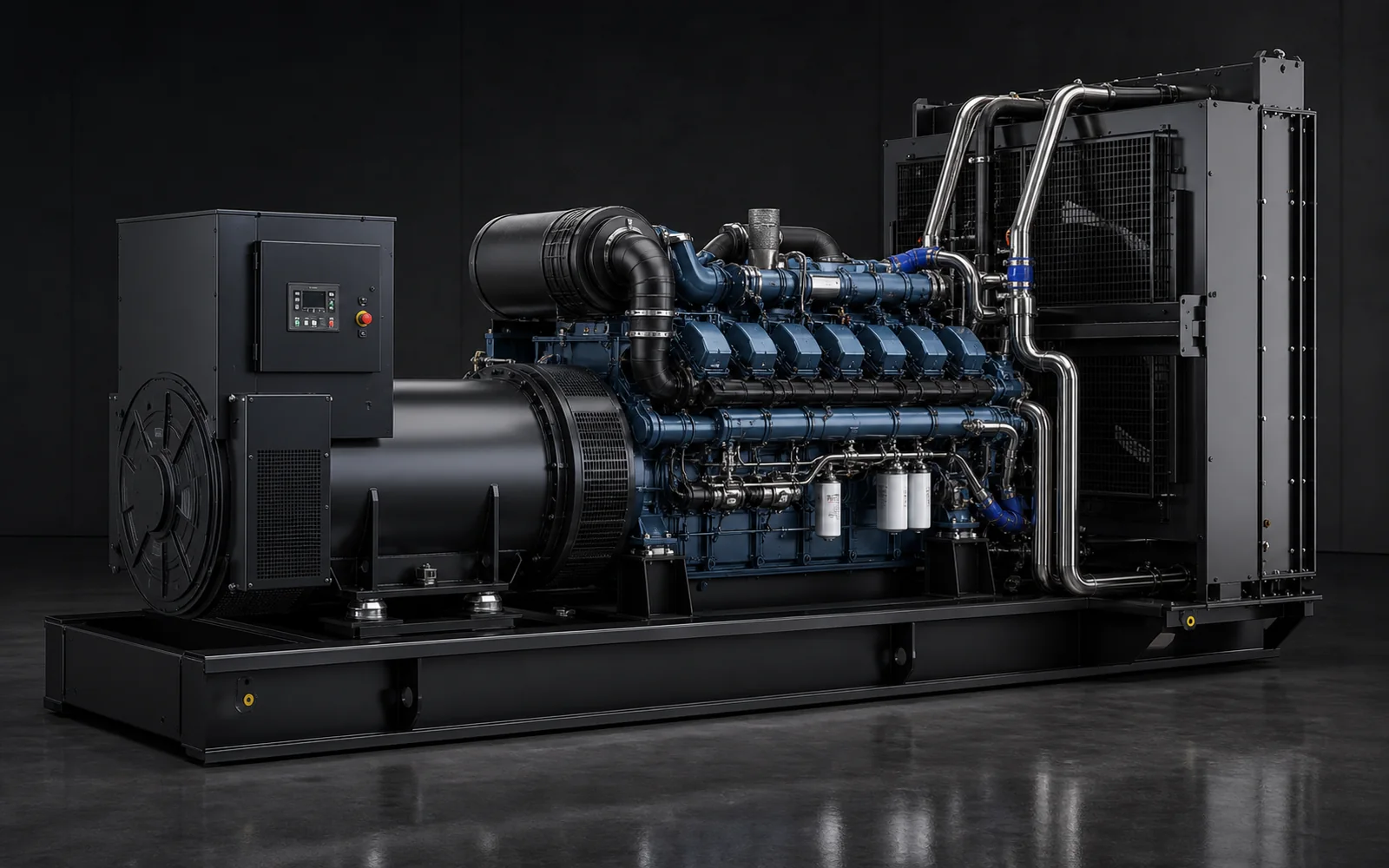
On 2026-11-07 the industry feeds again led with power urgency: Power Engineering International reported that gas turbines and batteries are 'cashing in' because AI data centers cannot wait for the grid to catch up (Power Engineering International, 2026-11-07). That pressure lands on buyers too - projects want the generator on site and running yesterday. The tempting shortcut is to skip or rush on-site commissioning and pay the balance on delivery. That is the most expensive corner to cut. Commissioning is the step that proves the set actually runs, connects and is safe at YOUR site, not just that it left the factory working. This guide covers what on-site commissioning and acceptance involve, the checks to run before you sign off, and the red flags that mean you should hold payment.
What does generator commissioning actually cover?
Conclusion first: commissioning is the on-site process that turns a delivered set into a proven, safe, running installation - and it is separate from the factory test. A complete commissioning covers the mechanical installation (set level on its base, anti-vibration mounts, maintenance clearances), the electrical connection and earthing, the fuel system, the exhaust routing, the controls and protective devices, a load and - where applicable - synchronizing test, and the handover documentation. Skipping any of these is how a set that 'worked at the factory' becomes a site failure. The factory proves the machine; commissioning proves the installation.
Does a passed factory test mean the set is ready at my site?
No, and this is the boundary most buyers miss. The factory runs a Factory Acceptance Test (FAT): the engine starts, reaches rated speed, and the alternator carries load while voltage, frequency and protection functions are checked. That proves the generator left the works correctly. It does not prove what happens after it is lifted, shipped, stored, wired into your switchgear and earthed to your soil. A loose terminal introduced during installation, a neutral earthing method that does not match your local code, or an exhaust run that re-entrains hot gas can all fail a set that passed FAT with flying colors. So require a Site Acceptance Test (SAT) that mirrors the FAT on your site, with the same load steps and the same recorded values - shipping and wiring are real risks, not formalities.
How do I verify the installation before I accept delivery?
Run these checks and treat any you cannot verify as unfinished. (1) Mechanical: confirm the set sits level on its foundation or skid, anti-vibration mounts are fitted, and there is clear access for maintenance and for the radiator or enclosure air path. (2) Electrical connection and earthing: verify the earthing (grounding) scheme against the local electrical code that applies to your site - NEC / NFPA 70 in the US, IEC 60364 or BS 7671 elsewhere - and confirm with the local Authority Having Jurisdiction (AHJ). The neutral earthing method (solidly grounded, resistance-grounded, or isolated) must match the design and be documented; ask the supplier for the earthing method statement and the measured earth electrode resistance. (3) Fuel system: tank, piping and any required secondary containment must follow local environmental rules - ask the supplier and your authority which containment standard applies - then leak-test, fill the day tank, and bleed any air from the lines. (4) Exhaust: correct routing with heat shielding, proper support, and no path for outlet gas to be drawn back into the air inlet. (5) Controls and protection: test the AVR, governor, protective relays (overcurrent, earth fault, over/under voltage and frequency) and the alarm and shutdown functions against the as-built drawings (see how the control panel and its functions are verified https://linkpowergenset.com/en/news/generator-control-panel-verification/). (6) Load and synchronizing test: step the set from 0 to 100% in the agreed increments and record voltage and frequency recovery after each step; if the set parallels, verify load sharing and synchronizing. (7) Documentation: collect the O&M manual, circuit diagrams and as-built drawings before you pay (see the pre-delivery site work these checks build on https://linkpowergenset.com/en/news/generator-site-preparation/).
When should I walk away from a commissioning proposal?
Hold payment and reconsider if any of these appear. Walk if the supplier will not commit to a written SAT that mirrors the FAT, or refuses to state who performs it - a set commissioned by an untrained local electrician against no procedure is a liability, not a saving. Walk if there is no earthing method statement and no measured earth resistance, because earthing is where unsafe and non-compliant installations hide. Walk if test reports, circuit diagrams or certificates (noise, emissions stage, CE/ISO as applicable) are refused or 'to follow later' with no contract date. Walk from any proposal that demands full payment on delivery with acceptance only 'by signature of receipt' - receipt is not acceptance. And walk if the quoted price quietly drops commissioning to save cost, because the saving is paid back the first time the set fails to start under load or trips on an undetected earth fault.
What documents must I receive at handover?
Make these a stated condition of final payment, not a polite request. At sign-off you should hold the O&M manual and operation instructions, the single-line and control circuit diagrams, the as-built / installation drawings, the FAT report from the factory (the factory process is described at https://linkpowergenset.com/en/factory/), the SAT / load-test record from your site, the earthing diagram with the measured electrode resistance, any noise test where a level was promised, and the emissions, CE and ISO certificates that apply to your destination - each written into the contract as an acceptance item (verify how the emissions stage is documented for export at https://linkpowergenset.com/en/news/verify-generator-emissions-stage/). Add the spare-parts list and a commissioning sign-off sheet signed by the person who ran the test. If a document is missing, the set is not accepted, and the balance stays withheld until it arrives. Review the product range before you specify (https://linkpowergenset.com/en/products/), and note that on-site electrical behavior - voltage, frequency and harmonic performance under your real load - is worth its own check (https://linkpowergenset.com/en/news/generator-power-quality-thd/).
The practical takeaway
Commissioning is the proof step between a delivered crate and a running, compliant installation. Before you release the balance: get a written SAT that mirrors the FAT with the same load steps and recorded values; verify the electrical connection and the earthing scheme against your local code and AHJ, with a measured earth resistance; leak-test the fuel system and check the exhaust routing; exercise the protective devices; and collect the O&M manual, drawings, test reports and applicable certificates as a contract condition of acceptance. Browse the product range (https://linkpowergenset.com/en/products/), the factory process and FAT (https://linkpowergenset.com/en/factory/), and the construction and industrial applications these checks serve (https://linkpowergenset.com/en/applications/construction/). LINKPOWER builds open, silent, mobile and containerized sets, runs a documented factory acceptance test with the order, and supplies a commissioning procedure and the handover document set so the set is proven at your site - not assumed - before you pay.
FAQ
Can I skip commissioning if the factory test passed? No. FAT proves the machine left the works; SAT proves it is correctly installed, earthed and loaded at your site. They test different things, and only the SAT covers the risks introduced by shipping, storage and your own wiring.
Who should perform the commissioning? A factory-trained technician or a qualified electrical contractor working to the supplier's commissioning procedure. Ask up front who runs it and request the procedure in writing, because an undocumented commissioning by an unbriefed installer is where compliance gaps appear.
How long does commissioning take? It depends on set size, whether it parallels, and site readiness, so ask the supplier to state the expected window in the proposal rather than assuming - but do not release the balance until the SAT is signed and the document set is complete, whatever the schedule pressure.
What we need from you
Send your site location and local electrical code, required kVA and voltage, frequency, whether the set runs prime or standby, and whether it will parallel with another set or the grid. We confirm the factory acceptance test the set is built and run to, supply the commissioning procedure and earthing method statement, and document the handover set - O&M manual, drawings, FAT and SAT records, and applicable certificates - so acceptance is a checklist, not a gamble. Start from the product range (https://linkpowergenset.com/en/products/), the factory process (https://linkpowergenset.com/en/factory/), or the construction and industrial applications (https://linkpowergenset.com/en/applications/construction/). You can also review how site preparation is done before delivery (https://linkpowergenset.com/en/news/generator-site-preparation/) and how the control panel is verified before commissioning (https://linkpowergenset.com/en/news/generator-control-panel-verification/).