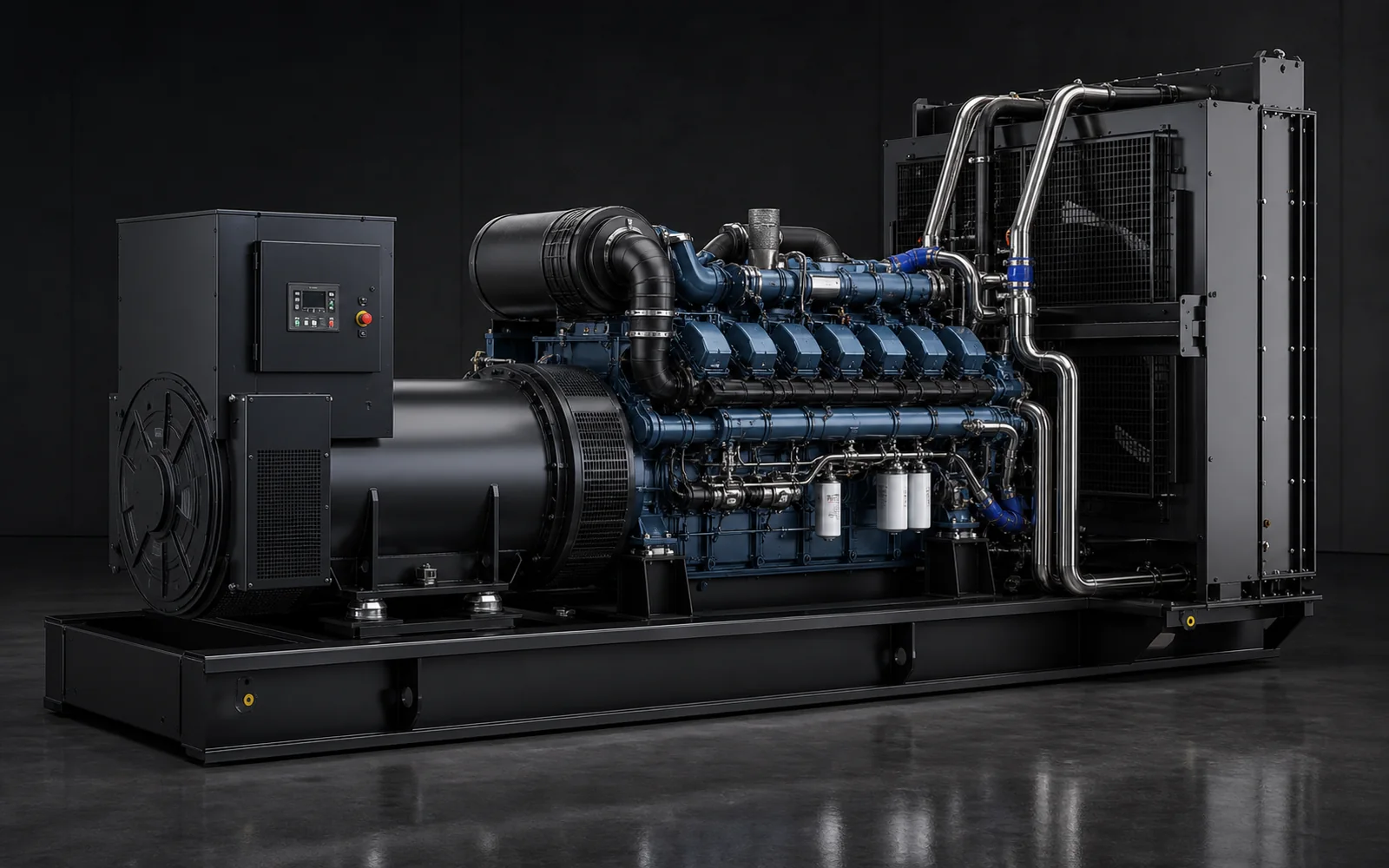
On 2026-11-10, Power Engineering International reported that gas turbines and batteries are 'cashing in' as AI data centers wait for grid power (Power Engineering International, 2026-11-10), and separately that PJM is putting generator performance at the center of its cold-weather plans (Power Engineering International, 2026-11-10). Both stories land on the same buyer question: what should the generator actually burn — diesel or natural gas? This guide answers that in practical terms: what each fuel means for uptime, fuel storage, emissions and verification, and how to confirm the right choice before you sign.
What actually changes when your generator runs on diesel vs natural gas?
Conclusion first: a diesel generator carries its own fuel in a tank on site, so it runs as long as that fuel lasts and the engine starts. A natural gas generator draws from a pipeline or gas grid, so it runs as long as the gas supply holds — but it stores no fuel of its own. The choice is really a choice about where your fuel risk lives: in a tank you control, or in a utility you don't.
That single difference drives everything else. Diesel sets need a fuel tank sized for the autonomy you require (see how tank sizing and on-site fuel are verified at https://linkpowergenset.com/en/news/generator-fuel-tank-sizing/). Gas sets need a confirmed gas pressure and composition at the connection point, plus a gas train approved for the engine. One fails when the tank runs dry or the fuel degrades; the other fails when the line is cut, the pressure drops, or the regulator freezes. Neither is 'better' in the abstract — they just fail differently, and your site decides which failure you can live with.
Does natural gas make my generator cleaner or exempt from emissions rules?
No — and this is the part buyers miss. Natural gas combustion is often cited by engineers as producing less particulate matter and NOx than diesel under comparable load, but gas engines introduce methane slip, and methane is a potent greenhouse gas. More importantly, a gas or bi-fuel generator is still subject to the emissions-stage rules of your market — EU Stage V, US EPA Tier 4, China NR-IV or India CPCB, depending on where it operates. Running on gas does not make a set exempt.
What to do: ask the supplier for the applicable emissions stage certificate and a conformity declaration for the exact engine and duty, and write the required stage into the contract with a rejection clause if it is not met. Treat any 'clean because it's gas' line as incomplete until the certificate is in your hand. For the verification steps, see https://linkpowergenset.com/en/news/verify-generator-emissions-stage/.
How do I verify the fuel supply and gas train before I buy a gas or bi-fuel set?
Run this checklist and treat anything you cannot get in writing as unfinished. (1) Get a written gas supply letter from your utility or gas network operator stating the available pressure band and gas composition at the connection point — the engine will only run inside a defined window, so confirm it before specification. (2) Confirm the gas train (regulator, filter, solenoid, mixer or injector) is approved for that gas and that band, and ask for the approval reference. (3) If you are considering bi-fuel (diesel base with gas admixture), ask for the kit's certification and the verified gas substitution percentage, not a brochure claim. (4) Ask the supplier for the runtime the set delivers on gas alone versus diesel, and have both figures written into the quotation. (5) State the fuel in the contract: 'natural gas only', 'diesel only', or 'bi-fuel with X% gas substitution', so the delivered set matches what you paid for. LINKPOWER builds diesel generator sets with Weichai, Yuchai and SDEC engines, configures them for your duty and site, and can discuss bi-fuel options where a confirmed gas supply exists — review the build and test process at https://linkpowergenset.com/en/factory/.
When should I walk away from a natural gas or bi-fuel generator?
Walk away if any of these appear. Walk if no one can give you a written gas pressure and composition at the connection point — a set specified without it may not start or may trip under load. Walk if the site has no redundant gas supply and the load is critical (hospital, data center, telecom): a single pipeline is a single point of failure that diesel's on-site tank does not have. Walk if you are in a cold climate and the gas train's freeze protection is not specified — regulator freeze is a known gas-set failure. Walk from any bi-fuel kit offered without certification or without a verified substitution percentage. And walk if the quote promises lower emissions without an emissions-stage certificate to back the claim.
How do diesel and gas sets compare on uptime, footprint and site constraints?
Diesel: fuel stored on site gives you independence from the gas grid and predictable autonomy if you size the tank (https://linkpowergenset.com/en/news/generator-fuel-tank-sizing/). The trade-off is fuel management — quality, polishing and resupply during long outages. Gas: no on-site fuel to manage and continuous supply while the line holds, but you inherit the gas network's reliability and a gas train that needs approval and periodic inspection. Footprint often favors diesel for the same electrical rating because the gas train and the larger engine needed for equivalent output can grow the envelope; noise and ventilation rules differ by site. Pick by where your real risk is — fuel supply or fuel storage — not by which sounds greener on paper.
Which engines does LINKPOWER build, and how do I get a comparable quote?
LINKPOWER builds diesel generator sets across open, silent, mobile-trailer and containerized packages, powered by Weichai, Yuchai and SDEC engines (see the engine options at https://linkpowergenset.com/en/products/weichai-diesel-generator/, https://linkpowergenset.com/en/products/yuchai-diesel-generator/ and https://linkpowergenset.com/en/products/sdec-diesel-generator/). For sites with a confirmed gas supply, bi-fuel configurations can be discussed case by case. Every set is configured to your load, duty and site, run through a documented factory acceptance test, and shipped with the documentation and spares needed for export. For the renewable-liquid-fuel alternative to natural gas, see https://linkpowergenset.com/en/news/diesel-vs-hvo-generator/.
The practical takeaway
Diesel and natural gas fail differently, so the right pick follows your site, not the headline. Before you buy: get the gas pressure and composition in writing if you go gas; confirm the gas train approval; demand the emissions-stage certificate for your market and write it into the contract; and state the exact fuel mode — diesel, gas, or bi-fuel with a verified substitution — so the delivered set matches the quote. If you cannot get a confirmed gas supply, diesel's on-site tank is the lower-risk default. Browse the product range at https://linkpowergenset.com/en/products/ and review the factory build and test process at https://linkpowergenset.com/en/factory/. LINKPOWER configures diesel generator sets with Weichai, Yuchai and SDEC engines for your duty and site, runs a documented acceptance test, and can discuss bi-fuel where a gas supply is proven.
FAQ
Can a natural gas generator run during a power outage if the grid is down but the gas line is fine? Yes — that is the appeal: it runs as long as the gas supply holds, independent of the electricity network. But confirm the gas network itself does not also fail in the same event (for example, a storm that cuts both), because a pipeline is still a single point of failure unless it is redundant.
Is bi-fuel worth considering? Only if you have a confirmed gas supply and want to extend diesel autonomy or lower liquid-fuel use. Verify the certified gas substitution percentage and the kit's approval first — an uncertified kit is a walk-away, not a feature.
Which fuel is cheaper to run? It depends on local diesel versus gas pricing and delivery logistics, which vary by country and even by region. Ask suppliers for fuel consumption at your actual load for both options and compare total operating cost, not the nameplate rating.
What we need from you
Send your running and motor-starting load, prime or standby duty, voltage and frequency, where the set will sit, your fuel preference and whether a gas supply is confirmed, required autonomy, and your engine brand preference. We confirm the configuration for your duty and site, state the emissions stage for your market and write it into the quotation, and document the factory acceptance test. Start from the product range at https://linkpowergenset.com/en/products/, the Weichai, Yuchai and SDEC engine builds, or review the factory process at https://linkpowergenset.com/en/factory/.