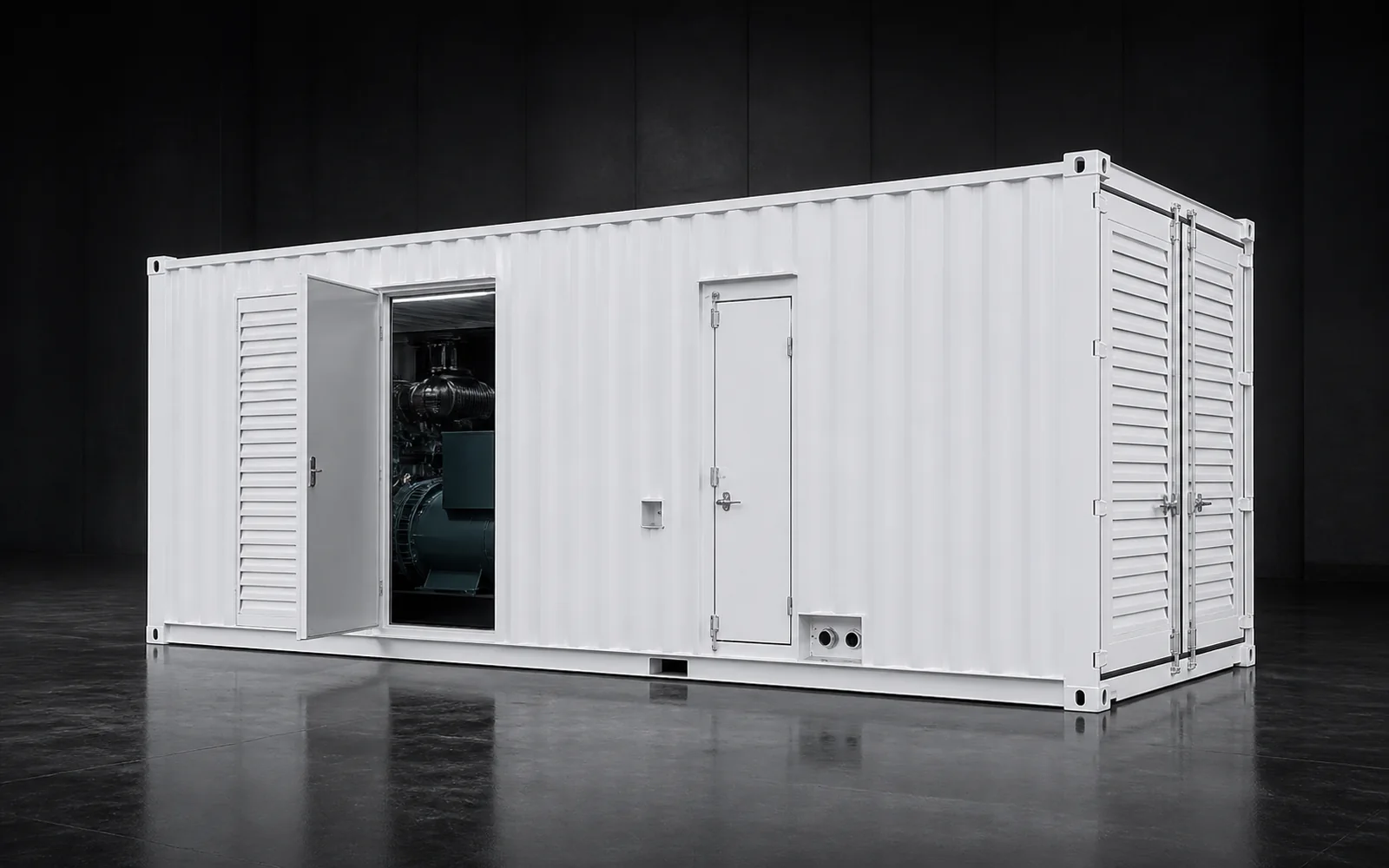
On 2026-11-11, Power Engineering International reported that PJM is putting generator performance at the center of its cold-weather plans (Power Engineering International, 2026-11-11), part of a wider late-2026 push where operators are re-examining whether on-site generation holds up under harsh duty and strict compliance. For buyers sending sets into refineries, petrochemical plants, offshore platforms or grain handling, the question is sharper than cold weather: does the generator need explosive-atmosphere certification, and how do you prove it? This guide explains what 'hazardous area' means for a generator buyer, whether your project needs an Ex-rated set, and how to verify the certification before you pay.
What does 'hazardous area' actually mean for a generator buyer?
Conclusion first: a hazardous area is a site zone where explosive gas, vapor or dust can be present in amounts that could ignite. The classification belongs to the site, not to the generator brand. Your job as a buyer is to know your site's classification and to require the set to be built and certified to match it.
Classification is organized by three numbers you will see on every datasheet. Zone defines how often the hazard is present (Zone 0/1/2 for gas, Zone 20/21/22 for dust). Gas group (IIA, IIB, IIC) defines the ignitability of the gas. Temperature class (T1 through T6) defines the maximum surface temperature the equipment may reach without igniting the atmosphere. The two frameworks buyers meet are ATEX (EU Directive 2014/34/EU) and IECEx (the international scheme built on IEC 60079).
Certification proves the equipment is safe in a defined explosive atmosphere. It does NOT certify power rating, fuel type, emissions stage or durability. A set can be fully Ex-rated and still be the wrong kVA, frequency or fuel for your project. Treat the certificate as explosion-safety proof only and verify the rest separately.
Does my project actually require an Ex-rated generator set?
Conclusion first: only if the set is installed inside a classified zone, or close enough that the site's hazard study says so. If your generator sits in a separate, non-classified building with proper separation and ventilation per the hazard assessment, you may not need Ex-rated equipment — but verify that with the site's classification document and the authority having jurisdiction (AHJ). Do not assume either way.
Assuming the wrong answer is expensive both ways. Assuming 'it's industrial, so it must need Ex' wastes money over-specifying and lengthens lead time. Assuming 'it's just a generator' on a gassy or dusty site can void insurance, fail the AHJ sign-off, and create a real ignition risk. Pull the zone, gas group and T-class from the hazardous-area classification (usually in the electrical or process design basis) and spec the set to it. The classification is the contract input, not a sales opinion.
How do I specify the right Ex protection for the site?
The protection method follows the zone, gas group and T-class your site requires — not the look of the enclosure. Four methods show up most. Ex d (flameproof) contains an internal explosion and stops it igniting the atmosphere outside. Ex e (increased safety) prevents arcs, sparks and high surface temperatures. Ex p (pressurization) keeps the enclosure at positive pressure so hazardous gas cannot enter — common for larger canopies and silent enclosures. Ex n (non-sparking) applies to lower-risk Zone 2 areas.
The difference that trips up buyers is Ex d versus Ex p. Flameproof contains an explosion that has already happened; pressurization keeps the explosive atmosphere out so no explosion can start inside. They are not interchangeable, and the correct choice depends on the zone and the equipment type — a packaged generator canopy is handled differently from a small junction box. State the zone, gas group and T-class in the RFQ so the configuration follows the classification. LINKPOWER configures sets to the buyer's stated classification across open, silent, mobile-trailer and containerized packages.
How do I verify ATEX/IECEx compliance before I pay?
Run this checklist and treat anything you cannot get in writing as unfinished. (1) Get the Ex certificate from a notified body for ATEX, or the IECEx certificate of conformity plus explosion-protection certificate from an accredited body; ask for the certificate number and the issuing organization. (2) Confirm the certificate's zone, gas group and T-class match your site's classification exactly — a Zone 2 certificate does not cover a Zone 1 requirement, and a T-class that runs hotter than your site allows is a rejection. (3) Confirm the certificate covers the whole packaged generator enclosure, not just one component; an Ex-rated control panel bolted to a non-Ex canopy is not an Ex-rated set. (4) Request the declaration of conformity and the equipment protection level (EPL) marking. (5) Write the exact zone, gas group, T-class and certificate type into the contract, with a rejection clause if the supplied certificate does not match. (6) If the set is enclosed, confirm the enclosure's IP rating and corrosion protection are specified for the environment too — for the coating and corrosion side, see the tropicalization guide at https://linkpowergenset.com/en/news/generator-tropicalization-corrosion/.
When should I walk away from a supplier's 'ATEX-ready' claim?
Walk away if any of these appear. Walk if the supplier says 'ATEX compliant' with no certificate number, no notified body named, and no zone, gas group or T-class stated. Walk if the certificate covers only a component — a panel or a motor — and not the packaged set. Walk if the T-class on the certificate is higher (hotter) than your site permits; at that surface temperature the surrounding atmosphere could ignite. Walk if the supplier cannot say which framework applies (ATEX 2014/34/EU versus IECEx) or confuses CE marking with Ex certification — CE is a broad conformity mark and is not explosive-atmosphere certification. Walk if the declaration of conformity or the EPL marking is missing, or if any emissions or stage claim arrives without a verifiable certificate: ask for it and write the required stage into the contract with a rejection clause — see the emissions-stage guide at https://linkpowergenset.com/en/news/verify-generator-emissions-stage/.
How does LINKPOWER configure sets for hazardous and harsh sites?
LINKPOWER builds diesel generator sets across open, silent, mobile-trailer and containerized packages, powered by Weichai, Yuchai and SDEC engines (options at https://linkpowergenset.com/en/products/weichai-diesel-generator/, https://linkpowergenset.com/en/products/yuchai-diesel-generator/ and https://linkpowergenset.com/en/products/sdec-diesel-generator/). For a classified site, the buyer states the zone, gas group and T-class in the RFQ, and the set is configured and documented to that requirement; review the build and test process at https://linkpowergenset.com/en/factory/. Containerized packages (https://linkpowergenset.com/en/products/containerized-power-system/) suit offshore and industrial sites where a pressurized or flameproof enclosure is needed. For coatings and corrosion in coastal or chemical atmospheres, see the tropicalization guide at https://linkpowergenset.com/en/news/generator-tropicalization-corrosion/.
The practical takeaway
Explosive-atmosphere certification is a site-classification question, not a brand question. Before you buy: pull your zone, gas group and T-class from the hazard study, spec the protection method to match, and verify the certificate covers the whole packaged set. Walk from any 'ATEX-ready' claim without a certificate number, a matching zone/group/T-class, and a declaration of conformity. Keep CE marking, IP rating, noise and emissions separate, each verified and written into the contract. Browse the product range at https://linkpowergenset.com/en/products/ and start from the factory process at https://linkpowergenset.com/en/factory/.
FAQ
Is ATEX the same as IECEx? No. ATEX is the EU legal framework (Directive 2014/34/EU); IECEx is the international certification scheme based on IEC 60079. A set can hold both. Confirm which your destination market requires before you spec.
My set sits in a separate room outside the classified zone — do I still need Ex rating? Possibly not, but only the site's hazard classification document and the AHJ decide that. Get the exclusion in writing before dropping the requirement; do not assume it.
Does Ex certification cover noise or emissions? No. Explosive-atmosphere certification is separate from noise dB(A), emissions stage, CE marking and IP rating. Request and verify each one separately, and write every requirement into the contract so the delivered set can be checked against it.
What we need from you
Send your site's hazardous-area classification (zone, gas group, T-class), duty (prime or standby), running and motor-starting load, voltage and frequency, enclosure preference (open, silent, mobile or containerized), required autonomy, engine brand preference, and the emissions market you must meet. We confirm the configuration, state the applicable certifications and write them into the quotation, and document the factory acceptance test against your stated requirements. Start from the product range at https://linkpowergenset.com/en/products/, the Weichai, Yuchai and SDEC engine builds, or the factory process at https://linkpowergenset.com/en/factory/.