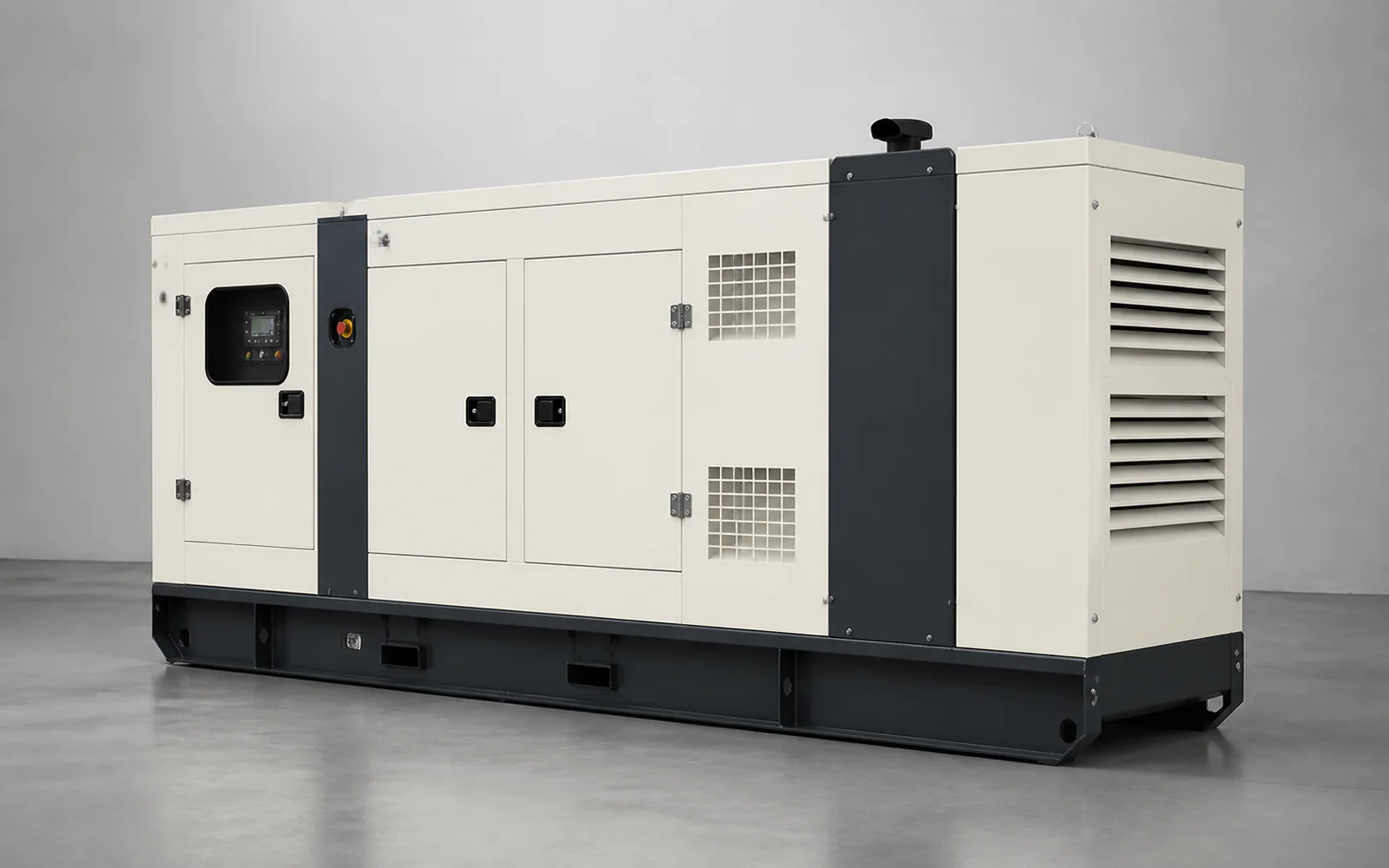
On 2026-11-09, Renewable Energy World published the POWERGEN 2027 keynote program, with grid reliability and the future of power generation front and center (Renewable Energy World, 2026-11-09). That is exactly why more operators are putting a generator on site — but a set that sits outdoors for years needs an enclosure that actually keeps dust and water out. The rating buyers are handed is the IP code. This guide explains what an IP rating on a generator enclosure really means, why a bigger number is not the same as 'waterproof', how to verify it before you pay, and the claims that should make you walk away.
What does the IP rating on a generator enclosure actually mean?
Conclusion first: an IP (Ingress Protection) rating is a two-digit code defined by the international standard IEC 60529, first published in 1976 and maintained by IEC Technical Committee 70. The first digit rates protection against solid objects — from 0 (none) to 6 (dust-tight). The second digit rates protection against water ingress — from 0 (none) to 9 (high-pressure, high-temperature jets). So IP54 means 'limited dust ingress, protection against water splashed from any direction'; IP23 means 'finger and object protection, protection against vertical water drips'. The code describes how an enclosure was tested, not the conditions it can survive forever — IEC itself stresses the rating indicates the test condition, not the real-world duty.
For a diesel generator the rating applies to the enclosure around the rotating and electrical parts — the alternator, the control panel and the breaker compartment. An open-type set is, by design, ventilated and not sealed, so its rating reflects that open structure; a silent or containerized set wraps the machine in a closed, weather-resistant shell. What matters is the rating of the assembly you are buying, stated for the specific set, not a number quoted for a different model.
Does a higher IP number mean my generator is waterproof?
Not on its own. A higher second digit means the enclosure passed a more demanding water test in the lab — but the IP code never says 'waterproof', and it does not certify performance against those exact conditions unless they are in the tested digit. An enclosure rated IPx8 (immersion) is tested for submersion under defined conditions, not for a lifetime of coastal storms. IEC is explicit that the IP rating indicates how the product was tested, not the conditions it can be used in. If a supplier calls a set 'waterproof', ask what IP digit that claim maps to and what test backs it.
The practical boundary: IP protects against ingress under test, but a generator outdoors also faces humidity, condensation and corrosive air. Those are handled by the enclosure design and surface treatment, not by the IP digit alone. A set rated IP54 can still corrode in a salt-air port if the coating is wrong — which is a different question from ingress (see how coastal and humid sites are treated separately at https://linkpowergenset.com/en/news/generator-tropicalization-corrosion/).
How do I verify the IP rating before buying?
Run this checklist and treat any item you cannot get in writing as unfinished. (1) Ask for the IP rating of the specific set you are ordering, by enclosure component — the whole package, the alternator terminal box and the control panel can carry different ratings, and the one you care about is the lowest of them. (2) Request the test report or certificate referenced to IEC 60529, with the test house and date, not a brochure number. (3) Confirm the rating matches your site: a low dust or water digit is a problem for open-weather siting, while an open-type set with a lower rating may be acceptable indoors in a ventilated plant room. (4) Put the rated IP and the test reference into the quotation and the contract, so the number is a commitment you can hold the supplier to. (5) Ask how the enclosure is built and tested before shipment — LINKPOWER runs a documented factory acceptance test and states the enclosure rating with documentation for your configuration (see the build and test process at https://linkpowergenset.com/en/factory/).
When should I walk away from an IP claim?
Hold and reconsider if any of these show up. Walk if the supplier cannot name the IP rating of the actual set, only a generic 'weatherproof' or 'IP protected' line — a rating that is not stated is a rating they have not committed to. Walk if the only documented rating covers the control panel while the alternator and breaker compartment are unrated, because those are the parts water actually damages. Walk if an open-type set is claimed at a high IP number — an open, ventilated package cannot be a sealed enclosure by structure, so the claim does not add up. Walk if your site is coastal, dusty or wash-down and the quote still shows a low rating with no explanation. And walk from any 'waterproof' promise with no IEC 60529 reference behind it — ingress protection is tested, not advertised.
Which package type fits my site — open, silent, or containerized?
The package type decides how much enclosure you get, and that is a structural choice, not a trim level. An open-type set is built for an engineered generator room where ventilation, exhaust and attenuation are part of the building — right indoors, wrong outdoors unsupervised (see the open-type build at https://linkpowergenset.com/en/products/open-type-generator/). A silent (acoustic) set wraps the generator in a weather-resistant enclosure and is the usual choice when it must sit outside near noise-sensitive areas (see the silent build at https://linkpowergenset.com/en/products/silent-diesel-generator/). A containerized set houses the machine in an ISO-style enclosure built for harsh or remote sites and weather exposure (see the containerized build at https://linkpowergenset.com/en/products/containerized-power-system/). Match the package to where the set lives, then confirm the enclosure rating for that duty. Compare the full range at https://linkpowergenset.com/en/products/.
What about corrosion protection and after-sales?
Ingress and corrosion are two different promises. The IP digit says how well the enclosure keeps solids and water out; it does not say how the steel survives salt air or acidic dust. For coastal, mining or tropical sites, ask for the surface-treatment specification — primer and topcoat system, galvanizing, or tropicalization package — and have it written for your environment. On after-sales, confirm what the supplier documents at handover (test reports, ratings, coating spec) and the spare-parts and response terms if a seal or panel fails in the field. LINKPOWER supplies open, silent, mobile and containerized sets with Weichai, Yuchai and SDEC engines, configures the enclosure and protection for your site and climate, and supports export shipments with the documentation and spares needed to keep the set running after it arrives.
The practical takeaway
An IP rating is a test code, not a weather guarantee. Before you buy: get the rated IP of the specific set, by component, referenced to IEC 60529; confirm it matches where the set will live; write it into the contract; and separate 'ingress-rated' from 'corrosion-protected'. Pick the package type by site — open indoors, silent or containerized outdoors — and verify the rating for that duty. Browse the product range at https://linkpowergenset.com/en/products/ and review the factory build and test process at https://linkpowergenset.com/en/factory/. LINKPOWER states the enclosure rating for your configuration, runs a documented factory acceptance test, and specifies the surface treatment for your climate so the set keeps dust and water out for the years it will actually sit outside.
FAQ
Is IP54 enough for an outdoor generator? For a fully enclosed silent or containerized set in normal open weather, an IP54-class enclosure is a sensible level — but confirm the exact rated digit and that it covers the alternator and control panel, not just the outer shell. If your site is coastal, dusty or wash-down, ask whether a higher rating or a different surface treatment is needed.
Does the IP rating cover rust from salt air? No. IP rates ingress of solids and water; it does not rate corrosion resistance. For salt-air or humid sites, request the coating or tropicalization specification separately and have it written for your environment.
Can I get the IP test report with my order? Ask for it as part of the quotation. A supplier who can provide an IEC 60529-referenced rating and test documentation for the specific configuration is showing they have actually verified the enclosure — which is what you want to see before you pay.
What we need from you
Send your site location and environment (open weather, coastal, dusty, wash-down), where the set will sit (indoor plant room or outdoors), required kVA, voltage and frequency, prime or standby duty, and your engine brand preference. We confirm the enclosure type and the rated IP for your configuration, state the surface-treatment specification for your climate, and document it in the quotation and factory test report. Start from the product range at https://linkpowergenset.com/en/products/, the package types, or the open, silent and containerized builds, and review the factory process at https://linkpowergenset.com/en/factory/.