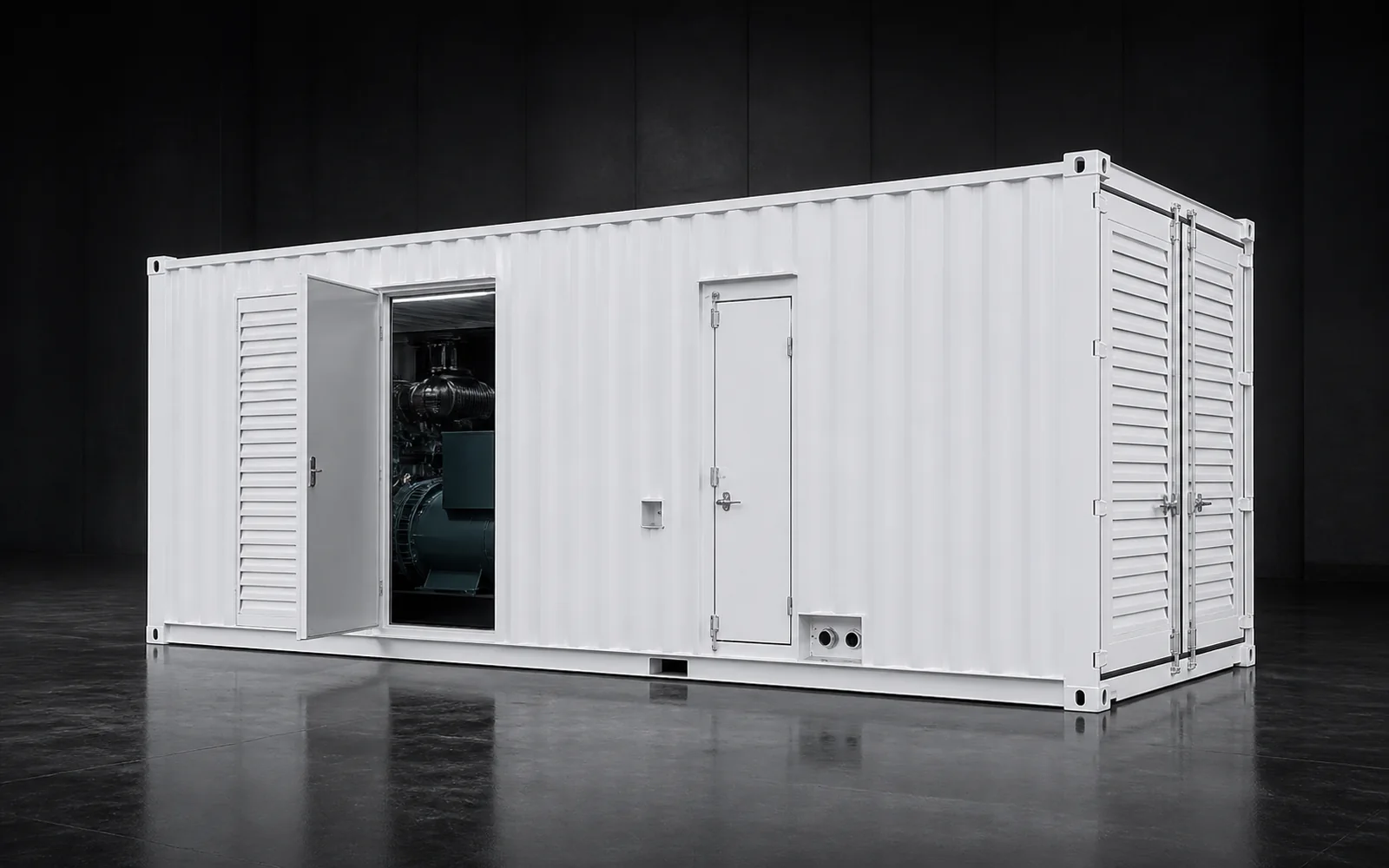
On 2026-11-06 the industry feeds again led with offshore and coastal energy: Cadeler won a contract for the 1.2 GW Dogger Bank C offshore turbine installation (Power Technology, 2026-11-06), and coastal solar, port and island projects keep multiplying across the Gulf, Southeast Asia and the Caribbean. More power equipment is being specified for salt-spray and high-humidity sites than ever - including the diesel gensets that back those projects up. The catch is that a set built for a dry inland warehouse will corrode on a coast or in the tropics in a fraction of its design life. This guide explains what 'tropicalized' actually means for a generator, what it does not guarantee, and the checks that prove corrosion protection before you pay.
Will a standard generator survive on the coast or in the tropics?
Conclusion first: a standard open set, and even a basic enclosed set with ordinary paint, will corrode far faster in salt spray or year-round humidity than most buyers expect - exposed steel can show rust within the first one to two years if nothing is specified. Corrosion is not cosmetic here. Salt-laden air attacks the skid, the frame, the fasteners, the radiator and the control enclosure, and once it reaches the electrical and alternator end it starts costing unplanned downtime. The environment, not the nameplate, decides how long the steel lasts.
What actually separates a coastal-rated set from a standard one is a defined corrosion-protection system, not a label. The international reference is ISO 12944, which classes environments from C1 (dry, benign) up through C4 (industrial, high humidity) to C5-M (coastal and offshore, high salt load) and C5-I (heavy industrial). A set destined for a port, desalination plant, island resort or offshore platform should be specified against C5-M, and the protection should be a multi-coat paint system with a named dry-film thickness, plus material choices like a hot-dip galvanized frame and stainless-steel hardware. If your quotation just says 'anti-rust paint', it is not specifying anything you can verify (see how enclosed and containerized builds handle harsh sites https://linkpowergenset.com/en/products/containerized-power-system/).
What does 'tropicalized' actually mean - and what doesn't it guarantee?
Tropicalization is a package of measures for high-humidity, high-temperature and salt-exposed sites: a corrosion-rated paint system (primer, intermediate and topcoat to a specified dry-film thickness), fungicidal treatment where fungal growth is a risk, moisture-control measures, and material upgrades such as stainless fasteners and epoxy powder coating. For standby sets that sit idle in humid air, it also typically means an anti-condensation space heater inside the alternator or enclosure to stop internal condensation between runs. That is the real content of the word - not magic.
What tropicalization does NOT mean is 'waterproof' or 'will never corrode'. Ingress protection is a separate thing, defined by the IP code in IEC 60529, and it tells you what the enclosure keeps out - solids and water - not how well the steel resists rust. A supplier who says 'marine grade' with no referenced standard behind it is asking you to trust a slogan. And no paint system removes the need for a maintenance plan; even a C5-M-rated coating is a designed life, not lifetime immunity. Treat any claim that a set is 'corrosion-proof' as a red flag and ask for the standard, the category and the test evidence.
How do I verify corrosion protection before buying?
Put these on the RFQ and treat vague reassurance as unfinished: (1) Ask for the paint specification by name - primer, intermediate and topcoat products, the total dry-film thickness in microns, and the ISO 12944 corrosion category the system is rated to (C3, C4, C5-I or C5-M); coastal and offshore should be C5-M. (2) Ask for the ingress-protection rating per IEC 60529 and the certificate, and confirm the rating matches the enclosure type - an open set cannot carry the same IP as a sealed container (https://linkpowergenset.com/en/products/open-type-generator/). (3) Request the material list: hot-dip galvanized skid and frame, stainless-steel external hardware, and epoxy or equivalent coating on exposed parts. (4) For standby sets in humid climates, ask specifically for an anti-condensation space heater and confirm it is in the standard scope, not a forgotten option (see how the enclosed build is configured https://linkpowergenset.com/en/products/silent-diesel-generator/). (5) Ask the factory for its coating process and any salt-spray test evidence per ISO 9227, and state in the RFQ that you may request a witness or a sample panel (the factory process is described at https://linkpowergenset.com/en/factory/). (6) Require the named standard, corrosion category, dry-film thickness, IP rating and material list to be written into the contract and the factory acceptance test, so what you were quoted is what arrives.
When should I walk away from a 'corrosion-proof' claim?
Walk if the supplier cannot name the ISO 12944 corrosion category or the dry-film thickness of the paint system - without those two numbers the 'protection' is unverifiable. Walk if 'marine grade' or 'tropicalized' is stated with no referenced standard (ISO 12944, IMO PSPC for ship-newbuild coating, or an equivalent) behind it. Walk if an IP rating is claimed but no IEC 60529 certificate is offered, or if the rating is impossible for the enclosure type - an IP67 claim on a ventilated open set is physically contradictory. Walk if salt-spray or coating evidence is refused and the coating spec is withheld. And walk from a rock-bottom price that ships 'standard paint' to a coastal ten-year install, because the saving evaporates the first time you replace a rusted radiator or a failed control enclosure.
The practical takeaway
Corrosion protection is a specified system - an ISO 12944 category, a named multi-coat paint dry-film thickness, an IEC 60529 IP rating, and material upgrades - not a sticker. Before you sign, get the corrosion category and dry-film thickness in writing, the IP certificate, the stainless and galvanized material list, and - for humid-climate standby - an anti-condensation heater confirmed in scope, all written into the contract and the acceptance test. Browse the product range (https://linkpowergenset.com/en/products/), the factory process (https://linkpowergenset.com/en/factory/), and the harsh-site options - silent enclosures (https://linkpowergenset.com/en/products/silent-diesel-generator/) and containerized power systems (https://linkpowergenset.com/en/products/containerized-power-system/) - as well as coastal and port infrastructure applications (https://linkpowergenset.com/en/applications/infrastructure/). LINKPOWER builds open, silent, mobile and containerized sets and documents the corrosion-protection specification and factory coating process with the order, so the set is proven for your site before it ships, not assumed.
FAQ
Is IP rating the same as corrosion protection? No. IP (IEC 60529) is about what the enclosure keeps out - dust and water jets; it says nothing about how the steel resists rust. You need both: an IP-rated enclosure and an ISO 12944-rated coating system, specified and certificated separately.
Can I just repaint a standard set after it arrives? You can, but field repainting rarely matches a factory-controlled multi-coat system with proper surface preparation, and by the time rust shows it may have reached the radiator or electrical parts. Specifying the right system up front is cheaper than chasing corrosion after commissioning.
Does a containerized set remove the need for tropicalization? Not entirely. A container protects the engine from weather and spray, but the internals - fasteners, the radiator, the alternator end - still need a corrosion-rated system for coastal and offshore service, and the container itself should be specified to the right ISO 12944 category.
What we need from you
Send your site location and environment (coastal, offshore, high humidity, dusty), required kVA and voltage, frequency, and how the set will run - prime or standby. We confirm the ISO 12944 corrosion category and dry-film thickness the set is built and coated to, the IEC 60529 IP rating for the enclosure, and the material upgrades (galvanized frame, stainless hardware, anti-condensation heater for standby), and we supply the coating specification and factory process with the order. Start from the product range (https://linkpowergenset.com/en/products/), the factory process (https://linkpowergenset.com/en/factory/), or the enclosed and containerized options for harsh sites (https://linkpowergenset.com/en/products/silent-diesel-generator/ and https://linkpowergenset.com/en/products/containerized-power-system/). You can also review how altitude and heat already cut output in hot climates (https://linkpowergenset.com/en/news/generator-altitude-temperature-derating/) and how emissions stage is verified for export (https://linkpowergenset.com/en/news/verify-generator-emissions-stage/).